What Happened
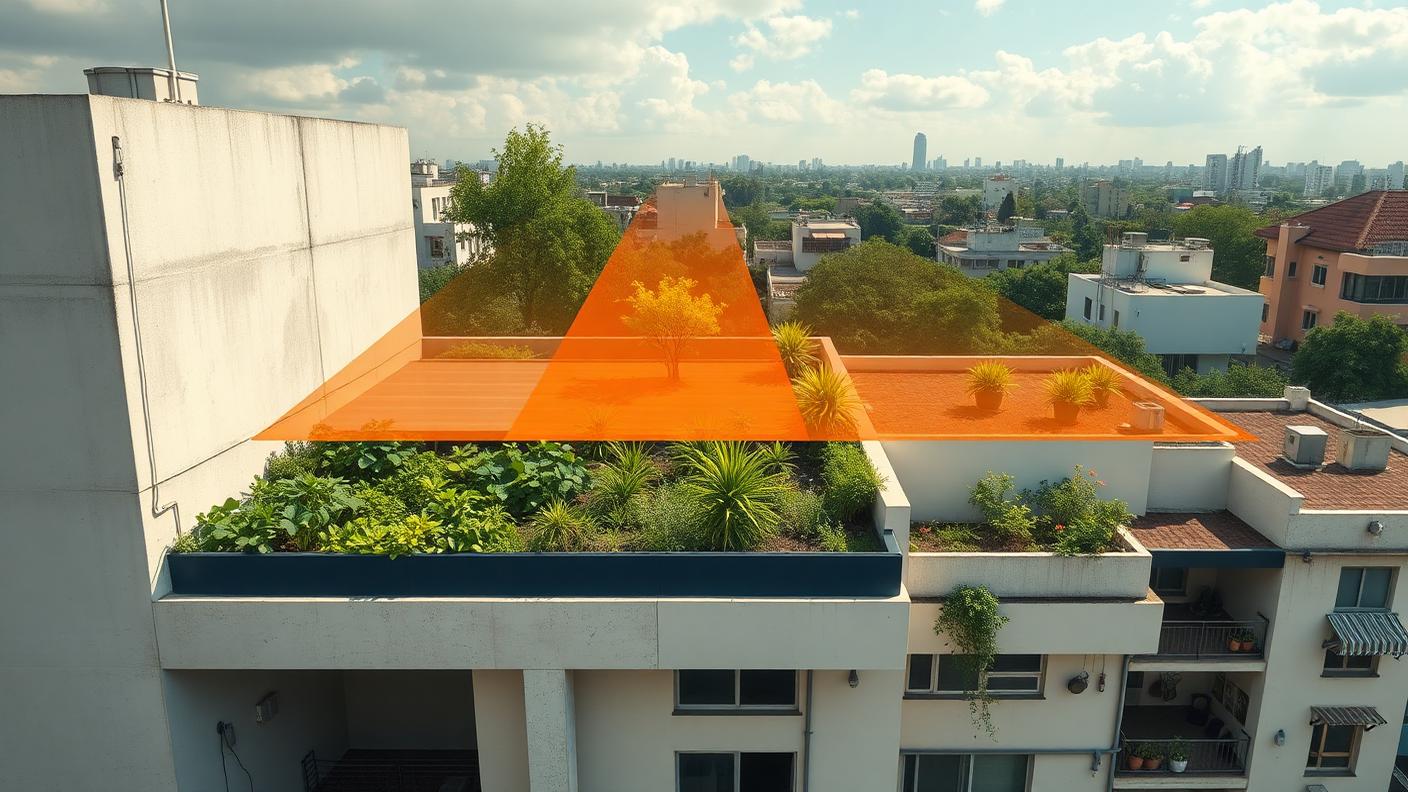
A study involving IIT-Madras and Okapi Research and Advisory examined the thermal effect of rooftop gardens in Chennai. Rooms below rooftop gardens were around 1-2 degrees Celsius cooler, and roof surface temperatures were reduced by about 8-12 degrees Celsius. Reductions in ceiling temperature were also observed. Study locations included Adyar, Chromepet, Otteri and Adambakkam.
Key Numbers
Indoor room temperature reduction: about 1-2 degrees Celsius. Roof surface temperature reduction: about 8-12 degrees Celsius. Ceiling temperature reductions also recorded. Locations: Adyar, Chromepet, Otteri, Adambakkam.
Why It Matters
The large number is the roof surface, and that is where the mechanism sits: a planted layer intercepts solar gain before it reaches the concrete slab. The smaller indoor figure is the one households experience, and 1-2 degrees is the difference between running a fan and running an air conditioner for many hours of the year.
Mandate Context
Urban heat is usually treated as a climate problem to be solved through energy policy. This study reframes part of it as a building-envelope problem with a low-cost intervention, measured across four ordinary residential neighbourhoods rather than a demonstration site.
Scale is the open question. Rooftop gardens require structural capacity, water and maintenance, all of which are easier in owner-occupied buildings than in rented or informal housing — which is where heat exposure is typically highest. A cooling measure that is cheap per building can still be unevenly available.
What To Watch
Whether the findings feed into municipal building guidance or incentives, whether measurements are extended across a full summer, and whether water and maintenance costs are quantified alongside the temperature benefit.